Showing posts with label science. Show all posts

Friday, April 10, 2009

FLOW: For Love of Water

2008, color documentary, 93 minutes
Directed by Irena Salina
Produced by Steven Starr
8 and up


Salina's documentary views the global water crisis through the eyes of activists struggling for access to clean, free water. The stories told here are fairly easy to follow for 8 and up, and kids used to seeing plastic bottles of 'blue gold' for sale everywhere really ought to hear this side of things. Activist/thinkers Vandana Shiva and Maude Barlow figure prominently in this narrative of an essential question of our time: can nature—the very elements of life—be owned? Or are they aspects of the worldwide commons, our birthright, what we share and steward together?

In the Hudson Valley, this film is making the rounds as a fundraiser for water-related issues such as those raised in Rosendale,NY by Save the Lakes.

Monday, April 09, 2007

The Way Things Go

Peter Fischli & David Weiss, 1987
color, 30 minutes
All ages

"Everyday objects doing cool things," is how my daughter described this chain of events set off by a spinning garbage bag. Foam, fire, explosions, liquids and wheels, a bit of physics and chemistry, and you have thirty minutes of ooh-ing and ah-ing. Delightfully, this film is ultimately about story, and children will love being the narrator, but they should spend at least one viewing listening. The Honda ad, "Cog," that purloined the concept and ideas from this film inspires awe too, but the original is more fun—longer, messier, and the objects have more personality.
Highly recommended for all ages.

Wednesday, October 11, 2006

Life: A Journey Through Time

Frans Lanting
Viewable online
All ages

"The Life Project is a lyrical interpretation of life on Earth from its earliest beginnings to its present diversity." Start with the slideshow on the website, then explore the timeline. This is all part of a multivenue spectacle that includes a book, orchestral performance (music by Philip Glass), and exhibition (scheduled to tour the world), in which images by Frans Lanting, a photographer for National Geographic, are placed in the service of telling the story of life on our planet. Read along with the slideshow or not...the pictures tell the story either way. Stunning.

Wednesday, October 04, 2006

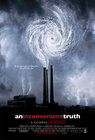
An Inconvenient Truth

Davis Guggenheim, 2006
100 min, color documentary
Ages 8 and up

"If this is happening, why don't they do something about it?" was my daughter's response after watching An Inconvenient Truth at the Hyde Park Drive-In, a special screening organized by the environmentalist organization, Scenic Hudson. I had worried that the movie would upset her, but I think she related to it as more of a science lesson, and Al does leave things on a rather bright note, stressing the potential for change and the generous ability of the earth to bounce back after extreme injury. My son (9), saw it with me when it opened, and now has seen it twice, and I think it's a good one for the right young viewers. They get a lot of earth science, particularly graph-reading experience, and Al's story of how he became a global warming activist, interspersed with his lecture on the state of the planet, is moving and inspiring. No time like the present to get kids thinking about the defining issue of their generation.

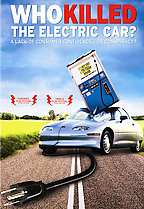
Who Killed the Electric Car?

Chris Paine, 2006
92 minutes, color documentary
Ages 8 and up

I took my kids to the theater to see this, and they had no trouble sitting through it, though the 9-year-old seemed to have an easier time following the story of the rise and fall of the electric car—and the various parties complicit in its demise—than my 7-year-old. This is one of the best-paced, most absorbing documentaries of its type I've seen, presenting a wealth of material in an intelligible way. A great discussion-starter about Big Oil, Big Autos, transportation alternatives, how public policy is created, consumer activism, and so on. The shadow issue lurking in the background of course, is whether automobiles are viable at all, but at least this is a place to start.

Who Killed the Electric Car? has a nice website with a teacher's guide, if you're into that sort of thing (In my experience kids come up with more interesting discussion questions than grown-ups.)

Rated PG for "brief mild language," but I can't even remember what it was. I think it will fly past most ears but make sure you pre-screen if you're concerned.

Wednesday, July 27, 2005

March of the Penguins

2005, Dir. Luc Jacquet
80 minutes, color documentary

The story of how the Emperor Penguin treks seventy or more miles across the ice to mate and create a rookery with fellow penguins is as compelling as any animal narrative could be. Penguins offer an example of animal fathers parenting equally, and watching the care with which both parents tend the egg and chick is profoundly moving. The best thing about this documentary is the photography; the camera that lingers over the birds in extreme close-up. It's a privilege to be able to observe them, in movement and in stillness, in a climate no blooded being should be able to call home.

There's a G rating, but parents of young children should know that some eggs and chicks don't make it—we watch an egg freeze on the ice, a father looking on helplessly; in another scene several fathers pass an egg on the ice and stop to eye it; there is a frozen chick. I left early with my six-year-old because that image made her so sad.

I'm going to write in more detail about this over on my other blog Oswegatchie, but I would very much prefer a different philosophy of scoring and narration in documentaries such as this one. There is way too much mainstream pressure on nature documentarians to 1) compare animals to humans; 2) score their "antics" to amuse us; 3) have a narrator blab at us in a not-particularly-enriching way.

Friday, May 13, 2005

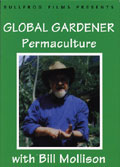
Global Gardener—Permaculture with Bill Mollison


112 minutes, documentary
home video version of Australian TV series

I don't know about your kids, but my kids love anything having to do with gardening. This one is so fun because Bill Mollison, who coined the term 'permaculture' and is perhaps its chief advocate, goes bouncing around the globe and we get to see people in India, Africa, the U.S. and elsewhere coaxing crops from a variety of soils. Images of seed-sowing, cut to profuse growth a few weeks later, gives us a very satisfied feeling. "I hate bad news," Bill says, folding up his newspaper and putting it under a couple of potatoes, covering it with some straw. "Now that's good news." Yes: roots and shoots through every newspaper!

Hey, ever notice how it's easy to find Toy Story at the library, and maybe hard to find the lesser-known stuff, like this one, that you might expect to see at a public library? Sometimes librarians just need a little education. This one is distributed by Bullfrog Films. Their link is to the left of this page, and they specialize in environmental media, much of it directed at children. Tell your librarian.

Recommended for all ages.

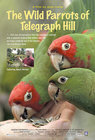
The Wild Parrots of Telegraph Hill


2003 / Dir Judy Irving
Documentary, 83 minutes

Mark Bittner became the unlikely field expert on a flock of wild parrots in San Francisco when he decided to take advice from the writings of Gary Snider to heart: "If you want to study nature, start right where you are." The engaging film Judy Irving made about him and the birds lets us get to know several parrots and their personality quirks intimately. My children were saddened by the death of a few of the birds, and scenes involving hawks are suspenseful, but I would recommend this one for anyone aged 5 or older.