Their name was already outdated, as they were replacing tapes with DVDs. So is our other local store, Alice in Videoland. "Alternative DVDs of Woodstock" and "Alice in DVDland" sure don't sound too poetic, but they wouldn't have lasted long anyway.
Members filed into the store at noon to pick over the stock. Hard choices. My son and I wound up with a bag full—a Scooby Doo tape, Cirque de Soleil and an episode of Ghost Writer (scored by a family friend) for him. For me and the rest of the family:
Documentaries: The Wobblies, Sister Helen (I thought it was about Helen Prejean; it's not; I hope it's good), Kilowatt Ours, In the Mirror of Maya Deren, Yours for a Song: The Women of Tin Pan Alley; Cinema Verite: Defining the Moment
Animation: Hiroshima No Pika; The Adventures of Prince Achmed (scroll down for the altfilmskids review)
Features: I Know Where I'm Going, Alexander Nevsky, Last Year at Marienbad
Compilations: America's First Women Filmmakers; Treasures from the American Film Archives
Performance: Great Pas de Deux for the ballet dancer in the family.
I didn't take the best stuff there but what I did get took two hours of standing in line at lunch hour and it was hard to choose.
I ran into four friends there and chatted with strangers. The woman next to me on line and I praised Tilda Swinton's performance in Deep End and discussed other films about motherhood. Another woman held up Black Stallion and said the opening was one of her favorite films, with which I heartily concur. Another woman bought every episode of The L Word. It was like a funeral—nice to be with people but for such a sad occasion, with all our favorite store employees pacing the aisles behind the counter to match empty boxes with tapes and discs. This is one of those stores where the staff is learned, like librarians, not like the vapid crew at Blockbuster, where you go in and ask for Meet Me in St. Louis and the kid has never heard of Vincent Minelli. This is a real loss to the community, and you probably have a similar story in progress in your town.
I wish everyone at Alternative Video a future of luminous endeavors.
Thursday, March 15, 2007
Thursday, February 01, 2007
Masters of Russian Animation, Vol. 1
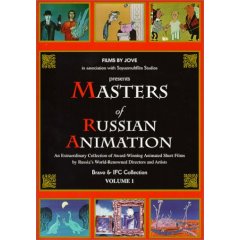 Various directors, 2000
Animated, Color, Subtitled, 133 minutes
All ages
Films included: The Story of One Crime (1962), The Man in the Frame (1966), My Green Crocodile (1966), There Lived Kozyavin (1966), Mountain of Dinosaurs (1967), Passion of Spies (1967), Glass Harmonica (1968), Ball of Wool (1968), Singing Teacher (1968), Film Film Film (1968).
A compendium of Russian shorts from the 60s produced in a variety of animation styles. Especially recommended: Vadim Kuchevsky's sweet, lyrical My Green Crocodile, done in stop motion; Nikolai Serebryakov's Ball of Wool about an old woman who knits herself a house from the wool of a magic sheep and is undone by her own greed, also stop-motion; and Anatoly Petrov's humorous Singing Teacher, done in pencil drawings, in which a hippopotamus tries warbling.
Tuesday, December 12, 2006
You Can't Be Neutral on a Moving Train
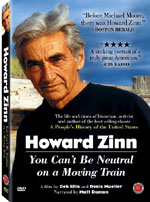 Deb Ellis and Dennis Mueller, 2004
color and b+w documentary, 78 minutes
Ages 9? & up
Resident 9-year-old says, "Well, I enjoyed it, but I think most kids would be restless and would rather watch a horrible crappy movie called The Wild instead of this." (Um, we didn't see The Wild.)
It ain't for nothing that you're parked at Alternative Films for Kids, folks!
This profile of professor/activist Howard Zinn, author of The People's History of the United States (which has sold a million copies), covers his adult life, which has spanned many of the key social and peace movements of our time. Ellis and Mueller track Zinn from his labor activism to his experience in the air force to his days as a Civil Rights leader at Spelman College to his peace activism during the Vietman War—and beyond. This is a great way for kids too young to read A People's History to learn some people's history—through the life of an engaged historian who continues to work for social justice.
Definitely not The Wild.
Note: contains some graphic archival footage of American police brutalizing demonstrators, bombs dropping during WWII and Vietnam, and Vietnamese civilians under attack.
Whale Rider (in Maori: Te kaieke tohora)
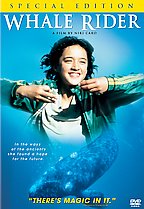 Niki Caro, 2003
color feature, 101 minutes
Rated PG-13
Could be ok for ages 5 & up but prescreen it and judge for yourself!
I had to wait a few years to show my 7-year-old daughter this amazing tale of a girl who turns life around for everyone in her New Zealand Maori village, because the conflict that drives the story—her grandfather's rejection of her leadership because she is a girl—is so unsettling and sexism is a complex topic. Keisha Castle-Hughes is perfect as Paikea, a girl born into a long line of male chiefs in a society drifting away from its roots. The PG-13 rating seems to come from fly-by uses of d*** and b******, but the real caution is the harshness of grandfather, played beautifully by Rawiri Paratene, who requires a miracle to convince him of the rightness in his family line. This is a story of love among family, community, ancestors and planet that defies gender expectations all around.
Tuesday, November 21, 2006
A Wrinkle in Time
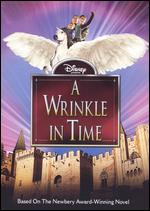 John Kent Harrison, 2003
color feature, 128 minutes
This Canadian adaptation of Madeleine L'Engle's classic would surely not have been as compelling had it been made in the States, where one never finds this much feminism packed into two-hour movies, particularly for children. We have a teenage girl protagonist/hero, three cosmic beings led by Alfre Woodard as Mrs. Whatsit representing Divine Love, a worm-like being with a masculine face representing God-the-Authoritarian-Father, and a very human father too injured to be the one to rescue his young son. Kate Nelligan as Mrs. Which and Alison Elliott as Mrs. Who, a family in which both parents are Ph.D.'s, Aunt Beast (yes! even a Wookie-like monster is female!—this one with magical healing powers) round out this experience of non-stop woman power. Brava! Every kid should see this; my kids have rented it twice; recommended for 7 or 8 and up.
Hollywood please take a lesson from our neighbors to the north.
Monday, October 23, 2006
Beckett on Film
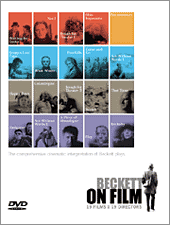 19 plays, four DVDs
Various directors, 2002
Produced by Michael Colgan and Alan Moloney
Age 6 and up
A couple of years ago my children created a drama in which they pretended to leave home with picnic lunches, traveled in a circle on a sofa for a while, and then began to sink in quicksand while trying to eat. "This is just like Beckett," I thought to myself. In the years since, they've become fans of Buster Keaton and the leap to Beckett is a natural one. Beckett on Film offers the perfect opportunity to explore his plays with your youngster, with directors like David Mamet and Atom Egoyan and actors including John Gielgud, Jeremy Irons, Kristin Scott-Thomas, Juliet Stevenson, & John Hurt. As we view the discs, I'll share our recommendations. They can be rented one at a time, at least from Netflix.
Disc 2: Includes "Krapp's Last Tape," "What Where," "Footfalls," "Come and Go" and "Act Without Words I." I recommend trying anything on this disc. My daughter watched all of "Krapp's Last Tape," while my son got bored during the second half—but they both loved the slapstick, which included John Hurt slipping on a banana peel. They both liked the silent "Act Without Words I." My son watched "Footfalls" twice, which I found somewhat surprising, but you never know, which is why anything appropriate and worth viewing, is worth trying with kids. Disc 4: "Act Without Words II," "Rockaby" and "Play" are recommended. "Play" has a few bad words but the characters, who are sitting in urns and brilliantly played by Juliet Stephenson, Alan Rickman and Kristen Scott-Thomas, speak very fast. The other two discs are less compelling to kids, I'd say.
Wednesday, October 11, 2006
Life: A Journey Through Time
 Frans Lanting
 Viewable online
All ages
"The Life Project is a lyrical interpretation of life on Earth from its earliest beginnings to its present diversity." Start with the slideshow on the website, then explore the timeline. This is all part of a multivenue spectacle that includes a book, orchestral performance (music by Philip Glass), and exhibition (scheduled to tour the world), in which images by Frans Lanting, a photographer for National Geographic, are placed in the service of telling the story of life on our planet. Read along with the slideshow or not...the pictures tell the story either way. Stunning.
Monday, October 09, 2006
A Touch of Greatness
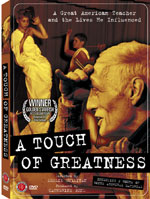 Leslie Sullivan & Catherine Gund, 2004
54 minutes + bonus material, color/b+w documentary
All ages
This portrait of progressive educator Albert Cullum offers inspiration to anyone who has ever been wearied by the education system. As a teacher in a conventional public school in 60s Rye, New York, Cullum introduced drama, spectacle and fun to his classrooms. For geography, the class went outside and hopped on one foot across a United States chalked onto blacktop, and "swam" a Mississippi River made of a long role of paper. Cullum directed student productions of Shakespeare in which his only notes, he claimed, were "I don't believe you." The results were stunning. Blends interviews and archival television broadcasts with film footage of productions of Shakespeare, Antigone and Joan of Arc shot by Robert Downey, Sr. My son said, "If all teachers were like that, I'd want to go to school." (If you're sending your child to a stultifying place for indoctrination, beware...they may not want to go back after watching this.)
Wednesday, October 04, 2006
An Inconvenient Truth
 Davis Guggenheim, 2006
100 min, color documentary
Ages 8 and up
"If this is happening, why don't they do something about it?" was my daughter's response after watching An Inconvenient Truth at the Hyde Park Drive-In, a special screening organized by the environmentalist organization, Scenic Hudson. I had worried that the movie would upset her, but I think she related to it as more of a science lesson, and Al does leave things on a rather bright note, stressing the potential for change and the generous ability of the earth to bounce back after extreme injury. My son (9), saw it with me when it opened, and now has seen it twice, and I think it's a good one for the right young viewers. They get a lot of earth science, particularly graph-reading experience, and Al's story of how he became a global warming activist, interspersed with his lecture on the state of the planet, is moving and inspiring. No time like the present to get kids thinking about the defining issue of their generation.
Who Killed the Electric Car?
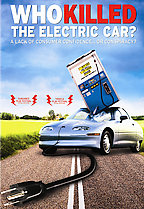 Chris Paine, 2006
92 minutes, color documentary
Ages 8 and up
I took my kids to the theater to see this, and they had no trouble sitting through it, though the 9-year-old seemed to have an easier time following the story of the rise and fall of the electric car—and the various parties complicit in its demise—than my 7-year-old. This is one of the best-paced, most absorbing documentaries of its type I've seen, presenting a wealth of material in an intelligible way. A great discussion-starter about Big Oil, Big Autos, transportation alternatives, how public policy is created, consumer activism, and so on. The shadow issue lurking in the background of course, is whether automobiles are viable at all, but at least this is a place to start.
Who Killed the Electric Car? has a nice website with a teacher's guide, if you're into that sort of thing (In my experience kids come up with more interesting discussion questions than grown-ups.)
Rated PG for "brief mild language," but I can't even remember what it was. I think it will fly past most ears but make sure you pre-screen if you're concerned.
Monday, October 02, 2006
A Note About Subtitles
Introduce subtitled movies early in your child's movie-viewing life (which should begin as late as possible) and don't make a big deal about it, is my unasked-for advice.
Most of the subtitled films I mention here are primarily visual and children can understand the story without reading. Some kids will be willing to read subtitles (if they are reading in general), some will just watch the images (fine), others will ask you to read (my husband and I take turns).
As they say, it's all good.
Except for the "English" option on DVDs. In my experience that is intolerable, but my 7-year-old did watch much of The Bicycle Thief with it turned on. Oh well, at least she saw the film.
Most of the subtitled films I mention here are primarily visual and children can understand the story without reading. Some kids will be willing to read subtitles (if they are reading in general), some will just watch the images (fine), others will ask you to read (my husband and I take turns).
As they say, it's all good.
Except for the "English" option on DVDs. In my experience that is intolerable, but my 7-year-old did watch much of The Bicycle Thief with it turned on. Oh well, at least she saw the film.
The Bicycle Thief
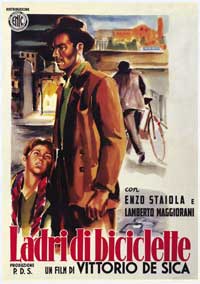
Vittorio de Sica, 1948
93 minutes, black & white
Italian with English subtitles
Ages 6 or so and up
My 9-year-old was rapt watching the elegant, simple story of a man on a mission to find a stolen bike without which he can't work or feed his family. The life of the young son, so different from ours, was a good starting point for a discussion of postwar life, poverty, urban hardship...depressing, but it worked for us, and it's an accessible cinematic classic.
Good go-with: Marcovaldo, short stories by Italo Calvino, set during the same period and later, can definitely be enjoyed by children.
Solidarity Not Charity
 Common Ground Collective
Posted to their website
Viewable online
All ages, but 5+ will get the most out of it
This organization has been working with New Orleans communities to gut homes, offer healthcare, keep people fed, fight evictions...you name it, all with a view to sustainable, nontoxic operating strategies. If you want your children inspired by the possibility of social change even in the midst of unthinkable disaster and governmental abandonment, here's a short, free stop you can make on your information highway cruise. Wish I'd known to post this a long time ago, but it's never too late to watch it with your kids and donate, send supplies, or better yet...take a working vacation. These folks have skills we can all use.
Friday, September 22, 2006
Heart of Tibet: An Intimate Portrait of the 14th Dalai Lama
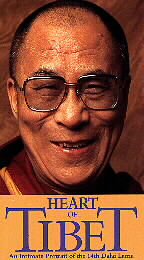 David Cherniack, 1991
60 minutes, color documentary
5 up
This portrait of the 14th Dalai Lama was created during a visit to California and includes interviews with American scholars of Buddhism such as Robert Thurman, plus footage of the Dalai Lama being interviewed by journalists, meditating, and making the rounds as he is greeted by supporters in the U.S. I especially liked these scenes, which focus on close-ups of people as they look into his eyes—one thing everyone seems to agree on about the Dalai Lama is that meeting him is an experience of pure joy. Parents of very young children be advised: provides background on the Chinese invasion of Tibet that includes archival footage of soldiers brutalizing Tibetans. An introduction to Buddhism that kids 5 and older should understand, as the Dalai Lama, the "simple monk," speaks plainly on fundamental subjects: love, compassion and service to others.
Wednesday, September 13, 2006
Primal Mind

Don Lenzer, 1996
With Jamake Highwater
58 minutes, color documentary
Ages 5 and up
Author Jamake Highwater talks about his own experiences growing up as an Indian in a foreign, dominant culture and the peceptual divide between primal and European cultures. He moves fluidly among topics—art, architecture, dance, painting. This is aimed at viewers of at least young adult age, but there is so much of interest to look at, and Highwater makes his points so clearly, that any child could benefit from one or more viewings.
Making Grace
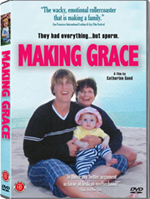
Catherine Gund
87 minutes, color documentary
All ages
A warm document of the journey of a couple, Anne Krsl and Leslie Sullivan, toward motherhood, following them through several visits to a doctor for insemination and culminating in the birth of their daughter, Grace. I watched this with my seven-year-old daughter and during and after, we talked about the various ways families are created. She loved it. When I asked her what she loved about it, she said "Everything." When I asked her what images stayed with her from the movie, she said "Grace." I think she got the idea. It's about love, perseverance and naturally, grace. Incredibly moving to see how a child's birth can heal a family and create community.
Friday, November 25, 2005
Sita Sings the Blues/The Sitayana
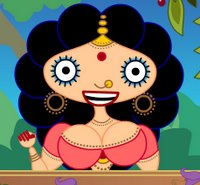 Artist Nina Paley
Sita Sings the Blues/The Sitayana; Viewable online
The Ramayana and the blues of the 20s (via vocalist Annette Hanshaw) get an exhilarating animation treatment from Nina Paley in this movie that's an accessible retelling of The Ramayana from Sita's perspective, and a fiery cross-cultural mash-up. Paley has been slowly building this work for years. When I first posted about it, Sita Sings the Blues was in progress and Paley was posting it to her website in chapter-sized chunks—now it's finished and collecting awards at festivals.
Here's a New York Times piece about it and how Paley developed the idea—a great story for people of any age about how creativity can be fueled by personal circumstance.
Despite Paley's difficulty in securing copyrights for some of the music in her animation, beginning February 26, 2009, Sita Sings the Blues will be viewable online through Channel 13, which is allowed to show it as a public broadcaster. This should be an active link to that.
For more of artist Nina Paley's work, including her graphic contributions to the Christmas Resistance Movement, visit
http://www.ninapaley.com/
Wednesday, September 21, 2005
Touch the Sound
 Thomas Riedelsheimer, 2005
99 minutes, color documentary
All ages
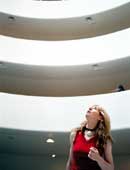
Evelyn Glennie, a deaf percussionist, plays a variety of instruments with several collaborators in this portrait of her that focuses on the question of what is sound, exactly, and how do we hear? The body as a resonator, synaesthesia, the sheer joy of having a huge space to bang a gong in—like Rivers and Tides (see below), Riedelsheimer's portrait of this sound artist is an exploration of how humans play in the world, this time focused on the vibrations around us. Interview footage with Glennie is alternated with various performance pieces, including several lovely marimba duets with guitarist/musician Fred Frith. My eight year-old said, "I thought it was about different instruments—how you don't have to use an instrument for the thing it was made to do." In theaters as of this writing; waiting for DVD might be a good idea, as watching it in pieces will help restless viewers. Riedelsheimer does not rush his material.
Rivers and Tides
 Thomas Riedelsheimer, 2001
90 minutes, color documentary
All ages
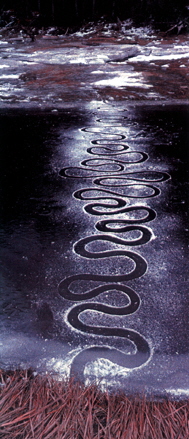
This is Riedelsheimer's beautiful portrait of sculptor Andy Goldsworthy, who works outside with elements of nature as his media: leaves connected by their stems carefully graded by color and set loose on a river, stones piled in to a beehive shape, scraped ice.
The movement of the sun and changes in the weather figure into his work as well, and children will recognize in Goldsworthy's studious, ambitious play, aspects of their own earthworks (if not, they need to spend more time outside).
The langorous, meditative pace of this film may be hard for children used to sensory overload, but the sheer technical skill Goldsworthy brings to his work should hold anyone's attention, and if you rent it you can watch it in pieces.
Wednesday, August 17, 2005
The Point
 1971, Dir. Fred Wolf
74 min., color animation
Music by Harry Nilsson
Ages 5 and up
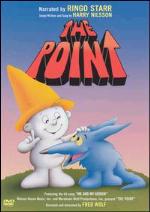
My generation saw it broadcast on TV; young ones now can rent it, and the message of accepting difference stays relevant. Most important, the music by Harry Nilsson will always be groovy. With voice performances by Ringo Starr as the father and Mike Lookinland (Bobby from The Brady Bunch) as the sweet wayfarer Oblio.
Tuesday, August 16, 2005
Love Is So Sweet

2004, Henry Lowengard and Nancy Graham—aka your host, red eft
Color digital animation
All ages
Here's one you can view online, in high- and low-bandwidth versions. My husband and I made it as an email Valentine; our daughter sings on the vocal track. Young children like to dance along with the animated characters with heart-shaped torsos; none are wearing any clothing, so consider this a naturalist cartoon.
Here's the link:
Love Is So Sweet
Saturday, August 13, 2005
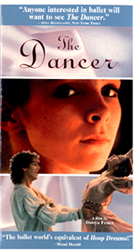
The Dancer
 1994, Donya Feuer
96 min., color documentary
Swedish w/English Subtitles
All ages
The Dancer follows Katja Bjorner, a teenage ballet dancer through rehearsals at at the Royal Swedish Ballet School, competitions and stage performance. Directed by a dancer, this film allows for lengthy, generous close-ups on the feet and hands, but it is the face, sweating, composed, emitting short breaths, that speak most eloquently of the dancer's discipline. There are no bloody unwrapped feet here, no anorexia or moments dwelling on missed opportunities—this is a vision of ballet as hard work and a big dream come true.
Fleshing out the studio sequences is a trip to the ballet shoe factory, where men stand all day at lasts making custom-fit shoes for dancers. We get to see them apply layers of fabric and wheat paste, shape the block, nail and ply the shoe—an art and discipline in itself.
Saturday, August 06, 2005
Charlie and the Chocolate Factory: Not Independent, I just feel like writing about it and it's my blog after all
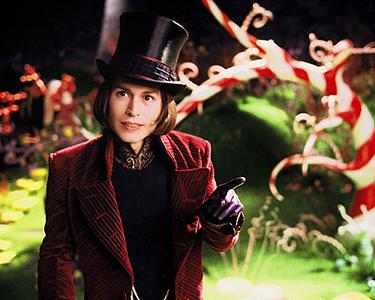
Tim Burton doesn’t need me to send people to the box office, but I’ve loved his recent work too much not to have a say about his latest alter-ego, and there’s no reason to leave things to film critics who work way too hard to be hip, ironic and smart all at once, like Anthony Lane ironizing in The New Yorker:
“The new Tim Burton movie stars Johnny Depp as an ageless weirdo, whose magical skills are matched only by his hangups about where he came from and how he is supposed to make friends with regular people. The film is called ‘Edward Scissorhands.’”
Sorry to pick on Anthony Lane but it’s too late to be reviewing CCF; maybe not too late to review a review of it.
Lane is right in seeing shades of Scissorhands in Willy Wonka, the latest of Tim Burton’s creative-genius-cum-social-misfit characters. Jack Skellington, Ed Wood, Batman and Beetlejuice are all here, but most of all Edward Scissorhands, who is referenced in everything from the production design of Charlie’s house, with its caving-in roof, to the grid-like orderliness of the town, to the scissors in Wonka’s hand when he cuts the ribbon to his factory, to the association of snow with love and creativity, to the tinkling incidental stylings of Danny Elfman.
With his continuing stories of outsider-artists, Burton has created something contradictory and, to use one of Wonka’s favorite words, “weird”—a series of personal blockbuster films. CCF, which is as surely about cinema as it is about candy, wrestles with this contradiction on the thematic level: how can someone so far-out be such a screaming financial success? Wonka, like Burton, is a wild, sometimes brooding talent making it in a bottom-line world, and while it isn’t cool anymore to talk about capitalism, it’s hard to keep from mentioning CCF’s many inconsistent messages about assembly-line production, wage slavery and machines/squirrels/Oompa Loompas vs. people. Burton and screenwriter John August are content at film’s end to leave most of Charlie’s town unemployed, supplanted by automation and “imported” workers from an undeveloped country willing to work for chocolate. (A chocolate Walmart Empire? Yes, you should be disturbed!)
But CCF is mostly about Wonka’s relationship to Burton’s other misfits and to Burton himself. Here, Edward Scissorhands has found success and fame, but something is still missing, that little thing called love, and whether, and how, it can co-exist with artistic flow. Finally, Edward has found his way out of isolation, if not out of his castle.
When Charlie leaves his crooked house and his endearing family (an only child with—count them!—six supportive parents to Wonka’s bitter single father) and enters the factory with his ticket-holding peers, the movie faithfully follows the book’s trail of cautionary disappearances, one misbehaving child after the next. The other kids are archetypal variations, children gone bad at the hands of distant parents. They all have some kind of exaggerated attachment disorder, and it will be up to Charlie and Grandpa Joe to show the worst case, Willie Wonka himself, out of his suffering. As in the book, children will be sucked into tubes, turned into blueberries and sent down garbage chutes, but the source of evil, and this is really elaborated in the movie, is an absence of appropriately nurturing parents: instead, they are rigid and distant, permissive and distant, controlling and distant. The failure of those who don’t “win” the Factory gambit is a failure of intimacy. (It's a failure of imagination too, of course: what does one do with a child all day? Park it in front of the TV, feed it, sign it up for competitive sports, give it presents.) The consequences suffered by those who don’t pay attention to Wonka, as Dahl wrote it and as underscored in this version, are not so much penalties exacted by him as the natural consequences of choices those families have made from the beginning.
Wonka knows this: we see him eye his charges shrewdly throughout the tour (one nice transition cuts from Wonka’s face to all the children and their guardians minus Wonka, seen from behind in the pink dragon boat; another shot lingers on Veruca Salt’s father, a nut factory owner, and Willy as they lock gazes). He pretends not to know their names and histories, although he obviously does his research and the film’s opening shows us how dysfunctionality takes only a quick newsclip to spot (of the ticket-holders, only Charlie is spared the pre-tour media blitz). Shying from Violet Beauregarde’s mother to sit by Charlie and Grandpa Joe (who unlike the other parents is roughly a contemporary of Wonka’s own father), Wonka offers Charlie a ladleful of chocolate, because he looks so hungry.
As for the other children, well, where they’re headed was a foregone conclusion when they opened their mouths on TV and told the world how they won, whether it mattered to them, and why. “There is no doubt that [Wonka] despises them,” writes Lane, “and that raises questions as to why he has lured them, with promises of candy, into his edible home.” In order to find just one like Charlie, is why. In order to befriend someone who knows that candy doesn’t have to have a point, but that there is a point to having a family.
It is Charlie who heals Willie’s rift with his father and gives him another try at having a family. And though Willie credits an Oompa Loompa with inspiring the psychoanalytic revelation that leads to his union with the Buckets (“I need a hair/heir!”), it’s Charlie who’s the real therapist, asking Willy leading questions throughout the tour: do you remember being a child, do you remember your first candy—finally giving his blessing to Willy’s genius (“It doesn’t have to have a point. That’s why it’s candy.”) What distinguishes Charlie from the other children is that he's treated like a person instead of a child; he's treated as a responsible member of his household. Burton himself has said Wonka hates children, but he flees from people of all ages; he's misanthropic. He likes Charlie, and Charlie is a child. Age is not the issue.
Like J.M. Barrie's gossipy friends in Finding Neverland, Lane has insinuations to make about Willy Wonka. (The Michael Jackson overtones imputed to Depp by so many viewers seem to me to lead nowhere, and distract from the story). True, Depp’s Wonka may be outlandish, androgynous, even foppish, but that doesn’t make him a sexual creep. One of the ways Burton won my trust was in the casting, through the relationship Johnny Depp and Freddie Highmore carry over from Finding Neverland. Another way he won it was by first making Big Fish, another fable about father-son reconciliation, in which the threatening atmosphere ultimately has to do with unconsious fears and the demands of the tall tale. In Big Fish, Burton is not about creeping us out; the eeriness heightens the everyday, common love that turns the wheels of the story. You can’t move the audience without a little friction, some gray areas, some uncertainties. But does Wonka try to lure a child alone with him into the Whipped Cream room? No.
Not that Depp’s Wonka should appeal to everyone, he's twisted and subversive in the Roald Dahl tradition, but I don’t think Depp and Burton have a nasty or sadistic intent. I didn’t react that way, and neither did my highly-sensitive children. Lane, reminded by Depp’s performance of Oscar Wilde, Michael Jackson and Tootsie (I guess because Lane thinks Depp’s fake teeth make him enunciate like Dustin Hoffman in that film), asks, “Where does moral tutelage end and sadistic farce begin?” The answer is that, as usual in his work, Burton gives us more, a fable wrapped in a fairy tale. There are moral lessons but there is magic, darkness, beauty and transcendence, too.
Hollywood is woefully short of new fabulists; children’s animation is often stuck in the land of irony and allusion, and there isn’t much in the way of live-action fare for anyone under ten, so many of us are grateful for this story in which the two little boys—Charlie and Young Willy—possess gifts young people (girls half the time, but don’t look to Burton for that) bring into the world and then, too often, have crushed out of them: the power to heal and the power to create. People keep asking “Why the Wonka backstory?,” but I like how the boys communicate across the years, both of them heroic and resistant to dominant culture in their own ways, and in ways that are not stereotypically masculine.
As for their foils: Veruca Salt, Augustus Gloop, Mike Teavee and Violet Beauregarde are recast in this version of CCF as more than deadly sins, they are authoritarian party-poopers, parental stand-ins who heckle Willie Wonka mercilessly about the practicality of his inventions. If we're not sorry to see them go, maybe it's because we have no trouble signing on to Wonka's tests. Will they listen to his ground rules? That's one test. The other is uniquely an addition of the film's, and characterisically Burtonesque: will they tolerate Wonka's creative excesses, his impractical, even useless dreams? “That makes no sense,” Veruca says of a Wonka creation, and Mike Teavee pronounces everything at the factory “totally pointless,” dissolving, in image and voice, into Wonka’s rejecting father, who echoes from the past, “Candy is a waste of time.”
Candy is a waste of time. So is filmmaking, unless you can make “buckets” of money at it. One of the joys and vicissitudes of the creator, whether candymaker or filmmaker, is that the artist’s imagination gets a vigorous workout while the consumers—the gluttonous Augustus Gloop, the full-time spectator Mike Teavee—consume. One person’s exuberant play is someone else’s addiction. Although the Wonka-as-director theme plays out during the entire factory tour, it is in the TV room scene that Burton makes the association to visual confections and their passive spectators (us) most explicit. Can we all be Wonkas or must most of us just sit and watch all the fun? In Burton’s other films, there is room for only one Misunderstood Creator. This time he moves over and makes room for another, a boy whose imaginative fancies are fueled by happiness instead of torment. As he proved with the big-hearted, forgiving Big Fish, Burton has matured.
Wonka’s response to the stifling little girls and boys he mistakes for his p-p-par-unmentionables is a series of childish outbursts. “Mumbler!” he shouts at Mike Teavee. “Seriously, I cannot understand a single word you’re saying.” They don’t speak the same language, and it’s no wonder that Wonka, the boy who felt so misunderstood he ran away from home, grew up to conclude, “A family is not conducive to a creative atmosphere.” Or is it? That’s the transformation we see with this Willy Wonka, and that’s what makes it a family film.
Wednesday, July 27, 2005
March of the Penguins
 2005, Dir. Luc Jacquet
80 minutes, color documentary
The story of how the Emperor Penguin treks seventy or more miles across the ice to mate and create a rookery with fellow penguins is as compelling as any animal narrative could be. Penguins offer an example of animal fathers parenting equally, and watching the care with which both parents tend the egg and chick is profoundly moving. The best thing about this documentary is the photography; the camera that lingers over the birds in extreme close-up. It's a privilege to be able to observe them, in movement and in stillness, in a climate no blooded being should be able to call home.
There's a G rating, but parents of young children should know that some eggs and chicks don't make it—we watch an egg freeze on the ice, a father looking on helplessly; in another scene several fathers pass an egg on the ice and stop to eye it; there is a frozen chick. I left early with my six-year-old because that image made her so sad.
I'm going to write in more detail about this over on my other blog Oswegatchie, but I would very much prefer a different philosophy of scoring and narration in documentaries such as this one. There is way too much mainstream pressure on nature documentarians to 1) compare animals to humans; 2) score their "antics" to amuse us; 3) have a narrator blab at us in a not-particularly-enriching way.
Sunday, July 17, 2005
The Dark Crystal
 1982, Dir. Jim Henson, Frank Oz
color, 93 minutes
Ages 6 or so and up
Henson and Oz pushed their muppetry to its mythic potential in this story of a world split into good and evil on the eve of its reintegration. The Dark Crystal gets extra credit points for two strong female characters, one an eccentric astronomer who can remove an eyeball and pop it back in again and the other a gifted animal communicator who (unlike her male counterpart) can unfold her wings and soar; also note the gender-neutral skeksis, creatures reminiscent of vultures. Inventive sets and lyrical interludes make this well worth watching even for any age. The skeksis can be frightening and there are some scenes my children find so suspenseful that they turn their heads away, but in general, they love this one. Bonus features include extensive interviews with the artists about the making of the sets and creatures. A must see for any child into the plastic arts, puppetry or fantasy stories.
Saturday, June 25, 2005
Gumby Show at AMMI on until January 2006

My son and I journeyed south to Astoria yesterday to spend the day with Gumby at the American Museum of the Moving Image. I worked there for about five minutes in the mid-80s, ok a bit longer, but it was during the period of rapid change when I hopped jobs and apartments frequently, that is to say, I was a young, unattached, restless New Yorker.
I still have a friend working at AMMI and it was great fun to visit him and see some of the inner workings of the museum. But the Gumby exhibit was the main attraction. My son, a committed filmmaker, liked the Gumby claymation demo well enough, but adored the 2D animation station, where the two of us sat side by side for hours making 100-frame animations with the provided cut-outs, then watching them. We saw a bunch of Gumby episodes, but my favorite piece from the Art Clokey oeuvre was a short called "Mandala" from 1964, an Eastern-influenced eruption of plasticity that will make you wish for a studio full of clay and an animation stand. That's what Art had in the 1100-sq. ft. basement where he shot Mandala, and his whole family worked on it. Gumby was something of a family effort as well—many of the plot lines came from stories Art made up to read to his children at night. (Even the shape of Gumby's head was family-inspired, but I won't give that one away if you don't already know; go see the show and find out the source of the adorable bump). We may safely add the Clokey family to the collection of creative spirit guides that inspire our playwork around this house.
Anyway, if you can get to museum, look for "Mandala" and "Gumbasia," Clokey's less commercial works, as well as lots of Gumby episodes, going back to the 50s.
When we finally tore ourselves away from Clokey and Pokey there was plenty else to wonder at, from a moving sculpture by Gregory Barsamian that takes advantage of persistence of vision to the special effects section, where my son took to a documentary about the mixing of archival and original footage in Forrest Gump. At the gift shop, he picked out a director's slate, which he has already started putting to productive use. For my husband, who bears a striking resemblance to the little green fellow, especially when he's smiling, we got a Gumby t-shirt. While animating we had missed the program of silent shorts in King Tut's Movie Palace, but given the choice between spectating and creating, what could we do? The day flew by; we hated to leave, but time was edging toward the last bus departure from Port Authority.
And we hadn't even had time to contemplate seeing the Comix Ex Machina show at the nearby Flux Factory!
Thursday, June 23, 2005
Beatrix Potter: Artist, Storyteller & Countrywoman
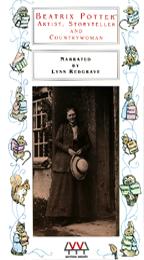
1993, Produced and directed by Cari Best, Paul Gagne and Judy Taylor
55 min., documentary
All ages
This documentary about the life of Beatrix Potter, the brilliant writer/artist behind Peter Rabbit, Mrs. Tittlemouse, Squirrel Nutkin and a dozen other memorable animal characters, gives a great sense of how she became such a fine observer of animals, the role solitude played in her creative development, and the means by which her work was introduced to a wide audience that continues to grow. Includes archival photographs and drawings. Late in life Potter bought land in the Lake District of England and became a conservationist, leaving 4,000 acres to the National Trust when she died. A must-see and a great accompaniment to the Royal Ballet's Tales of Beatrix Potter.
The Tales of Beatrix Potter
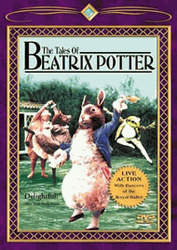 1971. Reginald Mills
90 minutes
All ages
The pull quote on the DVD cover says "delightful" and there really is no better word for this series of dances by members of England's Royal Ballet, featuring Beatrix Potter's animal characters, from Miss Tiggywinkle to Jeremy Fisher. The sets, costumes and masks and choreography awe and enchant; the dancing is fine and the slow pace and quiet moments are welcome (especially in contrast to what we watched afterwards, Looney Toons Back in Action—an unremitting assault on the senses; sorry to be square but within a few years I think we'll be diagnosing a lot of five-year-olds with tinnitus).
Monday, May 30, 2005
Ah! The Hopeful Pageantry of Bread & Puppet
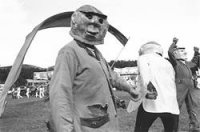
2002, Dir. Dee Dee Halleck & Tamar Schumann
84 minutes, color documentary
All ages
Plunge into the casual, creative community of the Bread & Puppet Theater in northeast Vermont, where people pilgrimage to take part in communal living and the creation of spectacles that advocate peace and decry greed. Children will enjoy seeing how the puppets are made and how people live at the Bread & Puppet farm; learn an important piece of our cultural history; and get an introduction to the work of Dee Dee Halleck, tireless advocate for democratic media. Possibly all ages; you be the judge.
Cane Toads: An Unnatural History
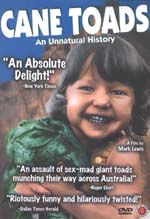 1988, Dir. Mark Lewis
48 minutes, color documentary
First Run Features
Who are the cane toads? Marvelously monstrous mega-toads imported to Australia from Hawaii in 1935 in an attempt to eradicate a beetle. The plan backfired bigtime, and this film tells why and shows how Australians, some of them anyway, took the poisonous, plaguey cane toads to heart. I spoke with a 10-year-old who really enjoyed the film, when I showed it to my children at ages 4 and 6 they were a little young; there are gruesome moments and mating habits are covered .
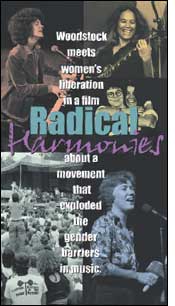
Radical Harmonies
 2002, Dir. Dee Mosbacher
90 minutes, color documentary
The story of the Women's Music Cultural Movement includes interviews and performances of some of the great feminists who revolutionized the music industry with women's festivals, women-owned music labels and women sound engineers. Here is a positive tale of how women seized the means of production at a time and in a field dominated by men. This is also a chronicle of rising lesbian awareness and what it meant to women to attend women's music festivals during the years when they were just getting started. Check out the production company, WomanVision.
One complaint: the performances are interrupted; wish we got to hear full songs interspersed with the interviews.
Ages 5 and up, but as always, pre-screen to verify your comfort level with the material.
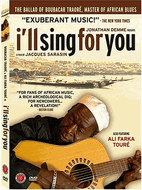
I'll Sing for You (Je Chanterai Pour Toi)
2004, Dir. Jacques Sarasin
77 minutes, color documentary
In French with English subtitles
A portrait of Boubacar Traoré, known as KarKar in his native Mali, where he was wildly poplular in the sixties, known as the voice of independence for his nation. Interviews shed light on his life, but unless your child is a facile reader of subtitles, the focus is the man who sings the story of his life and his country, accompanying himself on guitar (the child who sits improvising songs during his or her spare time will relate easily to KarKar). The music, architecture, faces and daily life of Mali give breath and breadth to this melancholy film. Check out this detailed review for more information.
The death of KarKar's wife, which occupies many of his songs, is discussed, guns go off briefly during a celebration, the word "sh*t" appears in subtitles. Recommended for ages 6 and up.
Saturday, May 28, 2005
We Pause for a Moment to Rail at Hollywood
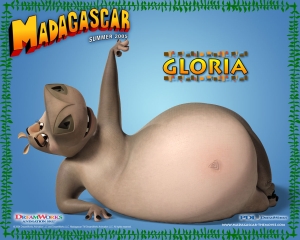
"Which was your favorite character?" My daughter asked me of the film Madagascar, which we saw today. Huh. A favorite. Well, there was basically one female character, a hippopatamus whose job as a character was to support the friendship of the male leads, a lion and a zebra. The zebra's conflict was that he needed some adventure and the lion's conflict was that he was hungry. At the risk of sounding like a humorless feminist, which I often am, I'm just a wee bit bored-to-death with male leads, their male sidekicks, and the females who get a corner of the screen to use staring at the dudes.
My son had been counting down the days until the opening of Madagascar. We had arranged to see it with a friend my children, his mother and his three-year-old brother. Much excitement leading up to it.
My spirits sank as I noticed, while checking showtimes and arranging to meet our friends, the PG rating "for crude humor." "Uh oh," I said into the phone to the other mother without thinking. "Here come the fart jokes. Or worse, if the script is really bad." When I hung up I turned to my son, who had tears in his eyes.
"I'm not going," he said with a choked voice. He really hates "juvenile humor," the provenance of adults with creative limitations who somehow managed, when history named this branch of comedy, to get juveniles blamed for things vulgar. For an hour he argued for staying home. "I won't like it."
"Look," I said. "There are websites for parents where they detail all the things about a movie that might be a problem for parents or kids. I can go read one of their reviews."
"I don't want to know what the problems are."
"That's ok, I'll read and report back to you without the details."
So I read the review on Kids-in-Mind, a site with a numbered rating system for sex and nudity, violence and gore, and profanity that intends to "enable concerned adults to determine whether a film is appropriate for them and their children according to their own criteria and values."
From their review it sounded like Madagascar would have the usual male-dominated cast, with one female in a principal role, the cliché mild-elder-woman-who-beats-up-a-ferocious animal...and we wouldn't be getting away without a fart joke or two. The only value of mine it seemed to support was that the giraffe gets an acupuncture treatment. All right!
And there would be some "name-calling," Kids-in-Mind noted, including "pansies."
The "profanity glossary" on the site says "Words or expressions that are used to denigrate and insult one's racial or ethnic background, gender or sexual orientation: Examples include the N-word, various anti-Semitic terms, and anti-homosexual terms like fa**ot."
In my book, "pansies" is anti-homosexual, so I wrote and told them so (nonsensically, it's also pejorative for "nonviolent").
To my surprise Kids-In-Mind wrote right back, said 'right you are,' and changed their designation of pansies to "derogatory." Which is why I'm plugging their site, which has been helpful to me on other occasions with the Highly Sensitive Viewers at my house. (Who until today, by the way, had never said "that sucks." Thank you so very much, whoever thinks a kid's movie can't do well without a PG rating.)
Hollywood should have purged itself of the anti-gay thing long ago, so why does it persist? And, aside from: 1) the occasionally-enlightened Pixar, which throws girls crumbs like Dory (Finding Nemo) and Jessie (Toy Story 2) and 2) the women's liberaton allegory Chicken Run, which in any case had to cross the Atlantic to be screened in the land where women's suffrage was first won (1869, in Wyoming Territory), why are female cartoon personalities nearly always one-dimensional, often ruled by sex jokes or shunted to the side?
If a female buddy movie starred a zebra and a lion, would they have to drive themselves off a cliff at the end so audiences wouldn't be too threatened by the awesome power of female buddyship? Please!
Wednesday, May 25, 2005
Alice in Wonderland
 1999, Dir. Nick Willing
150 min., live action (made for TV)
This is not the version of Alice in Wonderland I'd most like to recommend, but it's the only one I've seen recently, and my eight-year-old son insists I include it here. I could say 'get your own blog' but this activity is bad for posture and eyesight, I only do it as a public service. Favorite elements for my kids are Whoopi Goldberg's Cheshire Cat, Martin Short as the Mad Hatter and Robert Tygner as the March Hare.
Other versions worth checking out are stop-motion master Jan Svankmajer's (though I remember it as too disturbing for young children) and the puppet version directed by Lou Bunin (1951, 80 min.), and I'm sure there are plenty of worthy live-action versions, too.
Jean Cocteau's Beauty and the Beast
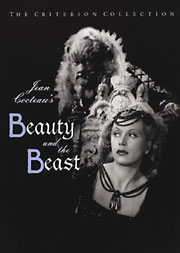 1946, Dir. Jean Cocteau
93 minutes, black and white
There is no reason to show your children any other version of Beauty and the Beast but this one, unless your idea of "cultural literacy" means "fluency in the full catalogue of the Disney Studio."
Cocteau's exquisite mystery spellbinds. This is a fairy tale in which the transforming power of love performs the magic, and if Belle is not a bookworm, she is a grown woman ready to separate from her family and make a garden flourish in the woods. The beast's living house will spark a child's imagination.
Suspenseful situations and, of course, a beast. Ages 5 or 6 and up.
Sunday, May 15, 2005
The Magic Flute
 1975 / Dir. Ingmar Bergman
135 minutes, color live action
In Swedish with English subtitles
Introduce your child(ren) to Bergman and Mozart at the same time with The Magic Flute! The winsome birdcatcher Papageno, fantastic sets and Bergman's daughter as a member of the audience will draw children into this fairy tale in which a young couple's love matures as it is tested. Could be enjoyed by children as young as four, maybe younger.
The Fool of the World and the Flying Ship
 1990 / Dir. Francis Vose
60 minutes, color animation
A Russian folktale told with charming stop-motion animation about a boy who wins the hand of a princess with help from friends with special talents. All ages.
The Films of Charles and Ray Eames
 Five-Volume Set
Years various, genres various
Those who admire Charles and Ray Eames for their industrial design, art, or architecture but don't know their films should rush right out for this DVD collection. The jewel of the bunch is Powers of Ten, a 1977 short that starts with the aerial view of a man sleeping on a picnic blanket and travels out into the universe and back, then into the man's hand toward the reaches of the infinitely small, all by powers of ten.
The Eames team made dozens of films, and your kids will find their own favorites. Check out Blacktop, a meditation on the beauty of water splashing across asphalt, or Toccata for Toy Trains (both from vol. 2) or the antique spinning tops of Tops (vol. 5), scored by Elmer Bernstein.
All ages.
The Puppet Films of Jiri Trnka
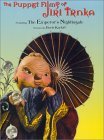
1951, Dir. Milos Makovec , Jirí Trnka ,
156 min., color animation
Every child should be raised on honest-to-goodness, old-fashioned stop-motion animation, and Trnka, who died in 1969 at the age of 57, was an innovator whose films create rich settings for moving, delightfully playful stories. This DVD collection includes The Emperor's Nightingale (1951, 67 min.), based on Hans Christian Andersen's fairy tale and narrated by Boris Karloff. Short Subjects: Story of the Bass Cello (13 min.), The Song of the Prairie (21 min.), The Merry Circus (11 min.), A Drop Too Much (14 min.), The Hand (18 min.), Jiri Trnka: Puppet Animation Master (Documentary, 12 min.)
My children's favorite is The Hand, a political story of an artist whose studio is invaded by a giant hand that directs him to make a statue of it and abandon the clay pots he's been making for his plant. To an adult this piece has frightening resonance, and it does end with the artist's death, so your mileage may vary with respect to the kids' reaction. The Emperor's Nightingale is beautiful and effective. The Merry Circus uses stop-motion mixed with flat posable characters that cast shadows. My favorite, Story of the Bass Cello, has chiaroscuro lighting and a contemplative atmosphere. My only complaint about the bonus feature, a documentary about Jiri Trnka, is that it's much too short.
Potentially for all ages; but note that A Drop Too Much is about drinking and driving, and The Song of the Prairie, a hilarious send-up of westerns, involves gun play amid much Nelson Eddy-style singing.
Saturday, May 14, 2005
My Neighbor Totoro / Kiki's Delivery Service
My Neighbor Totoro
Japan / Dir Hayao Miyazaki
86 min, color animation

Kiki's Delivery Service
1989 / Dir Hayao Miyazaki
102 minutes, color animation
His movies are pure magic. Miyazaki may be too big to call 'alternative' at this point, but his films for younger children deserve inclusion here for their gentleness, their fascination with the unfolding details of daily life, their strong girls and tender boys, and the kinetic joy of flying viewers experience when characters go airborne.
Totoro is a magical forest being that comes into the life of two young girls when their mother is hospitalized. The family life at the core of the story gets a dose of whimsy from Totoro and other spirits of the forest, including a Cat Bus.
Kiki's Delivery Service is one of my daughter's favorite witch stories. A young girl coming of age as a witch and leaving home (at the age of thirteen!) befriends interesting women of all ages, who mentor her toward discovering what makes her special.
Recommended for ages 3 and older.
The Cosmic Eye / The Hubley Collection
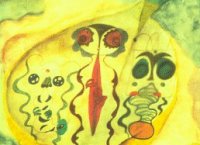
1986 / Hubley Studio
70 min., color animation
Three musicians from outer space observe Earth and offer a message of peace to our planet. Pioneer animators Faith and John Hubley collaborated often, but this one is Faith Hubley's only feature-length animated work. Our family loves their animations; the drawings seem to flow from the unconscious right to the pen in this work.
Many of their shorts, such as Star Lore, Sky Dance and Cockaboody, and Moonbird have been assembled in The Hubley Collection, a must-see. Daughter Emily Hubley is also an animator with some work posted on her website.
Recommended for all ages.
Friday, May 13, 2005
Global Gardener—Permaculture with Bill Mollison

112 minutes, documentary
home video version of Australian TV series
I don't know about your kids, but my kids love anything having to do with gardening. This one is so fun because Bill Mollison, who coined the term 'permaculture' and is perhaps its chief advocate, goes bouncing around the globe and we get to see people in India, Africa, the U.S. and elsewhere coaxing crops from a variety of soils. Images of seed-sowing, cut to profuse growth a few weeks later, gives us a very satisfied feeling. "I hate bad news," Bill says, folding up his newspaper and putting it under a couple of potatoes, covering it with some straw. "Now that's good news." Yes: roots and shoots through every newspaper!
Hey, ever notice how it's easy to find Toy Story at the library, and maybe hard to find the lesser-known stuff, like this one, that you might expect to see at a public library? Sometimes librarians just need a little education. This one is distributed by Bullfrog Films. Their link is to the left of this page, and they specialize in environmental media, much of it directed at children. Tell your librarian.
Recommended for all ages.
Hardihood
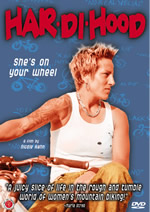
2001 / Dir Nicole Hahn
75 minutes, documentary
Women's athleticism is celebrated in this film about mountain bikers that features several lesbians. The grueling practice and racing scenes kept my children engaged. The strength and endurance of the women, and the way they defy narrow gender roles, dominate in this rugged little movie that you should pre-screen with your 5+ child in mind.
The Adventures of Prince Achmed
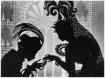
1926, Dir Lotte Reiniger
65 minutes, black + white silhouette animation
I am so sorry it took me so long to see The Adventures of Prince Achmed by Lotte Reiniger. The exquisite silhouettes and the tints of the restored print now available on DVD captivated my family, my kids stayed up past their bedtime to see the whole thing. My daughter fell asleep during the little biopic about Reiniger that follows, but the rest of us were rapt at the story of this woman who single-handedly (literally—she did all the silhouette cutting) pioneered the animated film and invented the silhouette film, supported enthusiastically by her husband, Carl Koch and three other men who formed her production team. Their collaboration and their vibrant cultural life led to friendships with Jean Renoir and Bertolt Brecht. Racial stereotyping of the villains necessitates some discussion.
Recommended for all ages.
People
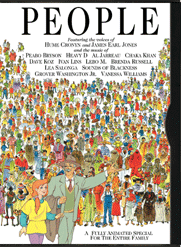
2003 / Prod. Joshua M. Greene
54 min., color animation
Based on a picture book by Peter Spier, here is the story of a girl and her grandfather on an imaginative journey exploring what makes people fight: is it difference? If we were all the exactly same, would we get along? Some of the animation here is stunning, especially a claymation sequence featuring eerie clone-people. Features the voices of Hume Cronyn and James Earl Jones, and music by Peabo Bryson, Al Jarreau, Vanessa Williams and Chaka Khan. Recommended by my 8-year-old for all ages.
Grocery Store Wars & The Meatrix

Here are two you can watch online! From FreeRange Studios come two Quicktime movies that satirize Hollywood movies and introduce organic farming, monocropping, pesticides and other "true costs" of food. Meet Obiwan Cannoli and Cuke Skywalker in Grocery Store Wars. (Vegetables shoot laser weapons and a melon explodes; some other violence.) See if you can escape The Meatrix! (Note: factory farming is at best disturbing. My motto: Before little eyes have seen, a loving guide should pre-screen!) These videos are being used by the Sierra Club in its new campaign to raise awareness of the politics of food.
The Meatrix Action Page: Ten things you can do to stop factory farms.
The Wild Parrots of Telegraph Hill
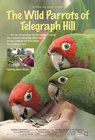
2003 / Dir Judy Irving
Documentary, 83 minutes
Mark Bittner became the unlikely field expert on a flock of wild parrots in San Francisco when he decided to take advice from the writings of Gary Snider to heart: "If you want to study nature, start right where you are." The engaging film Judy Irving made about him and the birds lets us get to know several parrots and their personality quirks intimately. My children were saddened by the death of a few of the birds, and scenes involving hawks are suspenseful, but I would recommend this one for anyone aged 5 or older.
The Story of the Weeping Camel
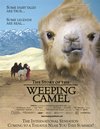
2003 / Dir Byambasuren Davaa, Luigi Falorni
Documentary
A Mongolian fairy tale based in legend and grounded in cultural tradition, The Story of the Weeping Camel tells an exquisite tale in poetic images. In Spring, camels give birth, and when one mother rejects her baby, refusing to nurse, the family of nomads who tends the herd sends two boys to bring them a musician who can perform a healing ritual. Children love the camels and baby sheep in the film, and the pace is refreshingly slow but visually rich. In Mongolian without subtitles; none needed. All ages.
Kirikou and the Sorceress
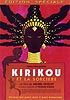
France 2000 / Dir Michel Ocelot
74 mins. Color animation, dubbed into English
Original soundtrack by Youssou N'Dour
Kirikou climbs out of his mother's womb and begins to question the tyranny of a sorceress in his African village. A strong child hero, a female villain whose evil is born of pain, and a traditional setting in which characters are frankly and unembarrassedly naked are among the many pleasures of this animated film.
The sorceress can be creepy for children under six, so pre-screen it and use your discretion.
Subscribe to:
Posts (Atom)